The Gemini 3.6 vs ChatGPT 5.6 comparison has become one of the biggest decisions for AI users in 2026. Both platforms have evolved into powerful assistants capable of coding, automating workflows, analyzing documents, conducting research, and handling complex multimodal tasks.
Both received major updates in mid-2026. Gemini 3.6 Flash, released on July 21, 2026, delivers better coding, stronger knowledge work, improved multimodal performance, and up to 17% lower token usage than its predecessor. GPT-5.6, released by OpenAI on July 9, 2026, introduced three models, Luna, Terra, and Sol, designed for everything from everyday tasks to enterprise workflows, software development, scientific research, and cybersecurity.
This Gemini 3.6 vs ChatGPT 5.6 comparison covers benchmarks, pricing, coding, writing, research, context windows, voice, AI agents, and real-world use cases to help you choose the model that best fits your workflow.
Quick Comparison Summary
| Feature | Gemini 3.6 Flash | ChatGPT 5.6 (Sol) |
| Developer | Google DeepMind | OpenAI |
| Release Date | July 21, 2026 | July 9, 2026 (Sol/Terra/Luna) |
| Context Window | 1,048,576 tokens (~1M) | 1,050,000 tokens (~1M) |
| Max Output | 64,000 tokens | 128,000 tokens |
| Knowledge Cutoff | March 2026 | February 16, 2026 |
| Coding (DeepSWE) | 49% | 67% (Luna, per cross-vendor data) |
| Coding (SWE-Bench Pro) | 58.7% | 64.6% (Sol) |
| GPQA Diamond | Not publicly reported for Flash | 94.6% (Sol) |
| OSWorld-Verified | 83.0% | 62.6% (Sol) |
| API Input Price | $1.50 / 1M tokens | $5.00 / 1M tokens (Sol) |
| API Output Price | $7.50 / 1M tokens | $30.00 / 1M tokens (Sol) |
| Voice | Yes (Gemini app) | GPT-Live (simultaneous speech) |
| Image Generation | Imagen integration | DALL-E / GPT-4o image gen |
| Best For | Cost-efficient agentic workflows, computer use | Hard reasoning, coding agents, enterprise work |
Key Takeaways
Gemini 3.6 Flash is significantly cheaper per token and leads on computer use (OSWorld-Verified: 83%) and long-context multimodal tasks. ChatGPT 5.6 Sol delivers stronger GPQA reasoning scores and higher marks on agentic coding benchmarks, but at a substantially higher API price. For most everyday users, ChatGPT 5.6 Terra is the practical comparison point to Gemini 3.6 Flash.
What Is Gemini 3.6?
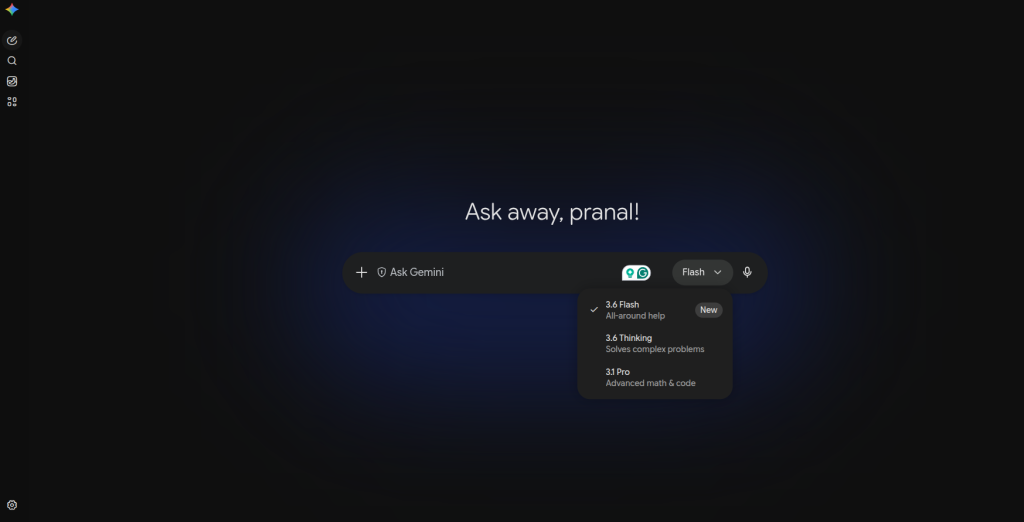
Gemini 3.6 Flash is the latest Flash-tier model from Google DeepMind, released on July 21, 2026. It sits in the middle of the Gemini model family, below the still-awaited Gemini 3.5 Pro flagship and above the ultra-budget Gemini 3.5 Flash-Lite.
Google built Gemini 3.6 Flash directly on developer and customer feedback from Gemini 3.5 Flash, targeting three core improvements: better coding performance, stronger knowledge work, and meaningfully improved token efficiency.
The model is not a frontier reasoning heavyweight. Google positions it as the agent production layer: Gemini 3.6 Flash is priced below its predecessor while beating it on every benchmark Google published, with the entire release built around one argument: for production AI agents, what matters most is fewer tokens, lower latency, and more predictable behavior per dollar, not a bigger model.
The model carries a 1,048,576-token input limit and a 65,536-token output limit. Standard output pricing falls to $7.50 per million tokens, down from Gemini 3.5 Flash’s $9.00, while input stays at $1.50 per million tokens.
Both Gemini 3.6 Flash and Gemini 3.5 Flash-Lite share a knowledge cutoff date of March 2026.
Major Features
Coding: Higher precision, fewer unwanted edits, reduced execution loops
Computer use: Built-in OSWorld-Verified scoring at 83.0%
Multimodal: Text, images, video, audio, and document inputs
Long-context: Strong GDM-MRCR v2 performance for document-heavy tasks
Google Workspace: Deep integration across Docs, Sheets, Gmail, and Drive
Agentic platform: Available in Gemini Enterprise Agent Platform
Typical use cases include production AI agents, agentic search, document analysis, multimodal research, coding workflows, and enterprise automation inside Google Workspace.
What Is ChatGPT 5.6?
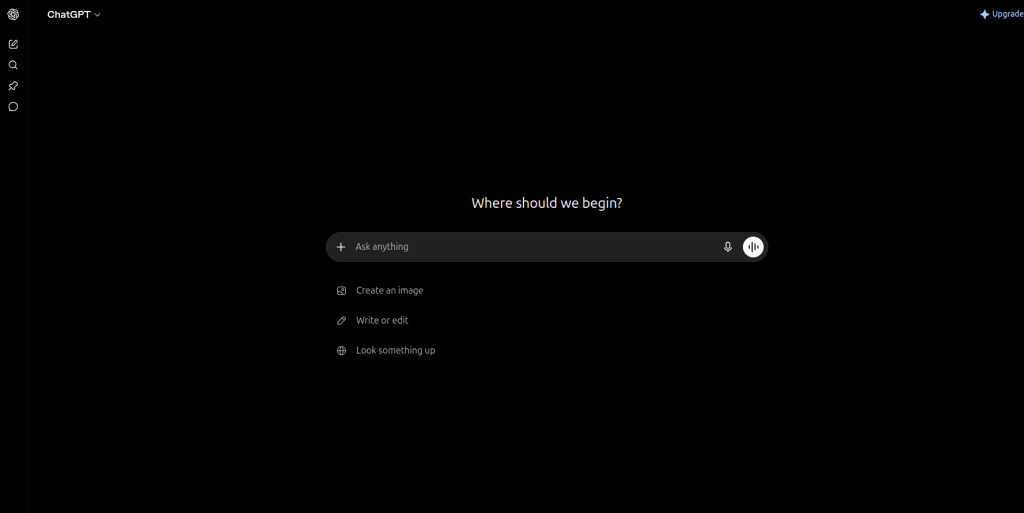
GPT-5.6 is a large language model developed and released by OpenAI on July 9, 2026, available in three variants ranked from least to most capable: Luna, Terra, and Sol. The models were designed to expand user capabilities across enterprise work, coding, scientific research, and cybersecurity.
In this new naming system introduced with GPT-5.6, the number identifies the model generation, while Sol, Terra, and Luna identify durable capability tiers that can advance on their own cadence, giving people and developers clearer choices across intelligence, speed, and cost.
The full public release on July 9 followed a restricted government preview that began June 26. OpenAI also announced a new generation of voice models called GPT-Live, which can listen and speak simultaneously, making interactions feel much more like real conversations.
GPT-5.6’s capabilities also include turning natural-language requests into polished, interactive explanations and visualizations within ChatGPT Work, and converting messy context from documents and everyday workflows like Slack, Notion, Microsoft 365, and Google Drive into expert-level shareable artifacts.
All three GPT-5.6 models share a roughly 1,050,000-token context window and a 128K maximum output limit. The knowledge cutoff is February 16, 2026.
Major Features
- Three model tiers: Sol (flagship), Terra (balanced), Luna (fast)
- ChatGPT Work agent for multi-step professional automation
- GPT-Live voice with simultaneous listening and speaking
- BrowseComp leading web research (92.2% for Sol)
- Cybersecurity capabilities: threat modeling, code review, blue teaming
- Microsoft 365 and Google Drive workflow integrations
Gemini 3.6 vs ChatGPT 5.6: Category-by-Category Comparison
User Experience
Gemini 3.6 Flash is available through the Gemini app across Android, iOS, and web, with tight integration into Google services most users already use daily. The experience is clean and fast, though the absence of a flagship 3.5 Pro model means power users are working with a mid-tier reasoning engine.
ChatGPT 5.6 brings the more dramatically redesigned experience. ChatGPT Work introduces an agentic layer where the model executes multi-step professional tasks across connected apps. The new Sol/Terra/Luna naming scheme makes it clearer which model tier you are using, though navigating three sub-models adds complexity for casual users.
Winner: Tie for everyday users. ChatGPT 5.6 for power users who want an integrated work agent. Gemini 3.6 for users embedded in Google Workspace.
Reasoning
GPT-5.6 Sol scores 94.1% on GPQA Diamond, a benchmark measuring graduate-level scientific reasoning across physics, chemistry, and biology. This is one of the highest published scores for any model on this test.
Gemini 3.6 Flash does not have a publicly reported GPQA Diamond score at the Flash tier. Google’s reasoning benchmarks for this release focused on coding and multimodal performance. The delayed Gemini 3.5 Pro is expected to be the direct reasoning competitor to Sol, but it is not yet publicly available.
Winner: ChatGPT 5.6 Sol for hard scientific and analytical reasoning.
Coding
This category is nuanced. Gemini 3.6 Flash scores 58.7% on SWE-Bench Pro versus 55.1% for Gemini 3.5 Flash, and achieves 49% on DeepSWE v1.1 compared to 37% for 3.5 Flash and just 12% for 3.1 Pro, showing a large generational improvement.
GPT-5.6 Sol scores 64.6% on SWE-Bench Pro, though Claude Fable 5 leads this specific benchmark at 80.0%.
GPT-5.6 Sol sets a new state-of-the-art result on the Artificial Analysis Coding Agent Index with a score of 80, which OpenAI claims is 2.8 points above competitors while using less than half the output tokens.
On Terminal-Bench 2.1 (agentic terminal coding), Sol Ultra scored 91.9%, and base Sol scored 88.8%, placing it ahead of Claude Mythos 5 (88.0%) and GPT-5.5 (88.0%).
Winner: ChatGPT 5.6 Sol on agentic coding and frontier benchmarks. Gemini 3.6 Flash is a strong mid-tier coding model at a much lower price.
Writing
Both models are excellent for professional writing, but they excel in different areas. ChatGPT 5.6 Sol consistently produces more structured, detailed, and context-aware content, making it a better choice for long-form articles, technical documentation, research reports, and other writing tasks where accuracy and depth matter. Gemini 3.6 Flash, on the other hand, focuses on speed and efficiency, generating concise, natural-sounding content that works well for marketing copy, emails, summaries, social media posts, and everyday business writing.
For individuals and teams creating content at scale, Gemini 3.6 Flash offers a clear cost advantage thanks to its lower API pricing and improved token efficiency. However, when handling complex or high-stakes content that requires stronger reasoning and factual consistency, ChatGPT 5.6 Sol delivers more reliable results with fewer revisions.
Winner: ChatGPT 5.6 Sol for long-form and high-precision writing. Gemini 3.6 Flash for fast, cost-effective content creation.
Research
GPT-5.6 Sol sets new results on BrowseComp at 92.2%, a benchmark measuring deep web research and information retrieval across many browser sessions. This is a meaningful lead for anyone using AI to research complex topics across multiple sources.
Gemini 3.6 Flash holds its own on long-context document analysis. On GDM-MRCR long-context tests, Gemini 3.6 Flash leads the entire benchmark comparison including all competitor models. For researchers working with long PDFs, academic papers, or large document archives, this is a practical advantage.
Winner: ChatGPT 5.6 Sol for web-based research. Gemini 3.6 Flash for long-document analysis.
Image Generation
Neither Gemini 3.6 Flash nor GPT-5.6 is primarily an image generation model. Both integrate with separate systems: Gemini with Imagen, and ChatGPT with DALL-E and GPT-4o’s native image generation. ChatGPT currently has a broader image generation ecosystem with more style controls and higher adoption among designers and marketers.
Winner: ChatGPT 5.6 for image generation ecosystem depth.
Image Understanding
Gemini 3.6 Flash scores 83.0% on OSWorld-Verified for computer use and shows strong improvements on chart reasoning benchmarks. Google has consistently owned the multimodal image and chart understanding space, and 3.6 Flash continues that trend.
ChatGPT 5.6 also handles image understanding well, but its OSWorld-Verified score of 62.6% for Sol trails Gemini 3.6 Flash noticeably.
Winner: Gemini 3.6 Flash for image and chart understanding.
Voice
OpenAI released GPT-Live alongside GPT-5.6, with two voice model versions (GPT-Live-1 and GPT-Live-1 mini) that can listen and speak simultaneously, making conversations feel significantly more natural. This is a meaningful upgrade over previous turn-based voice interactions.
Gemini’s voice features are solid within the Gemini app on Android and iOS, with integration into Google Assistant workflows. However, GPT-Live’s simultaneous speech capability is a clear step ahead for voice-first use cases.
Context Window
Both models offer approximately 1 million token context windows. Gemini 3.6 Flash supports 1,048,576 input tokens and 65,536 output tokens. All three GPT-5.6 models support approximately 1,050,000 context tokens and 128K maximum output.
The practical difference: GPT-5.6 supports twice the maximum output length (128K vs 64K), which matters for generating very long documents or code files in a single response.
Winner: ChatGPT 5.6 on maximum output length.
Memory
Gemini has persistent memory features across the Gemini app, allowing it to recall user preferences and prior context across sessions. ChatGPT has had memory features for Plus and Pro subscribers for over a year and continues to expand them. Both are competitive here.
AI Agents
ChatGPT Work is OpenAI’s new agentic interface that connects Sol to Slack, Notion, Microsoft 365, and Google Drive, turning natural-language instructions into expert-level shareable artifacts and automated multi-step workflows.
Gemini 3.6 Flash is available through the Gemini Enterprise Agent Platform, with computer use built in as a client-side tool via the Gemini API. It takes fewer reasoning steps and tool calls to accomplish multi-step workflows compared to its predecessor.
Winner: ChatGPT 5.6 for the breadth of the ChatGPT Work ecosystem. Gemini 3.6 Flash for cost-efficient agent deployment.
Ecosystem
Gemini 3.6 Flash integrates natively with Gmail, Google Docs, Sheets, Slides, Drive, Search, and Android. For anyone already working inside Google Workspace, this integration is seamless.
ChatGPT 5.6 connects to Slack, Notion, Microsoft 365, Google Drive, and custom OpenAI-hosted sites. The Codex environment and ChatGPT desktop app are now unified, creating a powerful coding and knowledge-work hub.
Winner: Depends on your ecosystem. Gemini for Google users. ChatGPT for cross-platform professionals.
API
Gemini 3.6 Flash standard API pricing is $1.50 per million input tokens and $7.50 per million output tokens, with context caching available.
GPT-5.6 Sol is priced at $5 per million input tokens and $30 per million output tokens at standard pricing. Terra costs $2.50/$15 and Luna costs $1/$6 per million tokens.
For developers building production applications at scale, Gemini 3.6 Flash offers strong value. For maximum intelligence per task, Sol’s higher output quality may justify the cost depending on the use case.
Winner: Gemini 3.6 Flash on API cost-efficiency. GPT-5.6 Sol for maximum performance regardless of cost.
Enterprise Features
GPT-5.6 Sol is OpenAI’s strongest cybersecurity model to date, supporting defensive activities including threat modeling, code review, patching, and blue teaming. ChatGPT Work, Codex, and the unified desktop app create a strong enterprise productivity stack.
Gemini 3.6 Flash is available in the Gemini Enterprise app and the Gemini Enterprise Agent Platform, with Google’s Vertex AI platform supporting third-party developer integrations.
Winner: ChatGPT 5.6 for security-focused enterprises. Gemini 3.6 Flash for Google Workspace-centric organizations.
Speed
Gemini 3.5 Flash-Lite reaches 350 output tokens per second for high-throughput workloads. Gemini 3.6 Flash is measured at approximately 304 output tokens per second in high-thinking mode with an 11.54-second time to first token. GPT-5.6 Sol is being brought to Cerebras hardware at up to 750 tokens per second starting in July 2026, initially limited to select customers.
Winner: GPT-5.6 Sol on Cerebras for raw token speed. Gemini 3.6 Flash for consistent production throughput at lower cost.
Benchmark Comparison Tables
Coding Benchmarks
| Benchmark | What It Measures | Gemini 3.6 Flash | GPT-5.6 Sol |
| DeepSWE | Long-horizon software engineering | 49% | ~67% (vs. Luna; Sol not separately reported) |
| SWE-Bench Pro | Production-grade repository bug fixing | 58.7% | 64.6% |
| Terminal-Bench 2.1 | Agentic terminal coding | 78.0% | 88.8% (Sol) / 91.9% (Sol Ultra) |
| MLE-Bench | ML engineering tasks | 63.9% | Not published |
| Coding Agent Index | Holistic coding agent performance | Not ranked | 80 (state of the art per OpenAI) |
Note: DeepSWE, SWE-Bench Pro, and Terminal-Bench are different benchmarks measuring different aspects of coding performance. Cross-model comparisons require caution. Gemini 3.6 Flash and GPT-5.6 Luna are closer peers in terms of price positioning; Sol is a significantly more expensive model.
Reasoning Benchmarks
| Benchmark | What It Measures | Gemini 3.6 Flash | GPT-5.6 Sol |
| GPQA Diamond | Graduate-level scientific reasoning | Not publicly reported for 3.6 Flash | 94.6% |
| BrowseComp | Deep multi-session web research | Not publicly reported | 92.2% |
| OSWorld 2.0 | Real computer use tasks | Not reported | 62.6% |
| OSWorld-Verified | Computer use (verified subset) | 83.0% | Not separately reported |
| Agents’ Last Exam | Long-running real-world workflows | Not reported | 53.6 (vs. Claude Fable 5 at 40.5) |
Note: All benchmark figures above are vendor-reported unless otherwise stated. Independent third-party replication is still limited given the recency of both launches.
Real-World Testing
Content Creation: Gemini 3.6 Flash is the more cost-effective option for producing large volumes of blogs, marketing copy, and SEO content. ChatGPT 5.6 Sol delivers more polished and consistent results for complex, long-form writing.
Coding and Debugging: ChatGPT 5.6 Sol is the stronger choice for multi-file projects, advanced debugging, and agentic coding tasks. Gemini 3.6 Flash handles everyday development well while keeping API costs significantly lower.
Research and Document Analysis: ChatGPT 5.6 Sol performs better for deep web research and complex reasoning, while Gemini 3.6 Flash excels at analyzing long documents, PDFs, and other large-context workloads.
Productivity and Data Analysis: Gemini 3.6 Flash integrates seamlessly with Google Workspace, making it ideal for document and spreadsheet workflows. ChatGPT Work offers broader cross-platform automation across tools like Slack, Notion, Microsoft 365, and Google Drive.
Expert Tip: Choose ChatGPT 5.6 Sol when maximum reasoning and coding performance matter most. If you’re running high-volume AI workflows where cost and efficiency are priorities, Gemini 3.6 Flash delivers better overall value.
Pricing Comparison
| Subscription / Access | Gemini 3.6 Flash | ChatGPT 5.6 |
| Consumer App | Gemini app (free and paid tiers) | ChatGPT (Plus / Pro access to 5.6) |
| API Input Price | $1.50 / 1M tokens | Sol: $5.00 / Terra: $2.50 / Luna: $1.00 |
| API Output Price | $7.50 / 1M tokens | Sol: $30.00 / Terra: $15.00 / Luna: $6.00 |
| Context Caching | $0.15 / 1M tokens | Prompt caching supported (cache writes at 1.25x) |
| Batch / Priority | $0.75/$3.75 (batch), $2.70/$13.50 (priority) | Varies by tier |
| Max Output | 64K tokens | 128K tokens |
Terra is positioned to deliver performance comparable to the previous-generation GPT-5.5 at roughly half the price, making it the centerpiece of cost planning for most API developers.
Decision Checkpoint: If you are building a production application and need strong reasoning without Sol’s premium cost, GPT-5.6 Terra at $2.50/$15 and Gemini 3.6 Flash at $1.50/$7.50 are the natural comparison pair.
Use Cases: Which Model Should You Choose?
| User Type | Best Choice | Reason |
| Developers (agentic coding) | ChatGPT 5.6 Sol | Terminal-Bench 2.1 and Coding Agent Index leadership |
| Developers (cost-conscious) | Gemini 3.6 Flash | Strong SWE-Bench Pro at 3x lower output cost |
| Students | Gemini 3.6 Flash | Google Workspace integration, lower cost |
| Researchers (web) | ChatGPT 5.6 Sol | BrowseComp 92.2% for deep web research |
| Researchers (documents) | Gemini 3.6 Flash | Leads GDM-MRCR long-context benchmarks |
| Writers and Content Teams | Gemini 3.6 Flash | Token efficiency for high-volume production |
| SEO Professionals | Gemini 3.6 Flash | Cost-efficient batch content generation |
| Business Users | ChatGPT 5.6 (Work agent) | Cross-platform integrations, artifact creation |
| Teams (Google Workspace) | Gemini 3.6 Flash | Native Gmail, Docs, Sheets, Drive integration |
| Data Analysts | Tie | Gemini for chart reasoning; ChatGPT for cross-app workflows |
| Beginners | ChatGPT 5.6 (Terra) | Familiar interface, strong output quality |
| Enterprise (security) | ChatGPT 5.6 Sol | Leading cybersecurity and threat modeling capabilities |
| Designers | ChatGPT 5.6 | Stronger image generation ecosystem |
Pros and Cons
Gemini 3.6 Flash
| Pros | Cons |
| Much lower API cost ($7.50 vs $30 output) | Not a frontier reasoning model (no flagship Pro yet) |
| Leads on OSWorld-Verified computer use (83.0%) | 64K max output vs. Sol’s 128K |
| Best in class on long-context benchmarks (GDM-MRCR) | GPQA scores not publicly reported for Flash tier |
| Strong chart reasoning (CharXiv) | GPT-5.6 Luna outperforms it on DeepSWE and Terminal-Bench |
| March 2026 knowledge cutoff | Gemini 3.5 Pro still unavailable publicly |
| Token efficiency (17% fewer output tokens) | Limited cybersecurity-specific features vs. Sol |
ChatGPT 5.6 Sol
| Pros | Cons |
| Highest published GPQA Diamond score (94.6%) | Much higher API cost ($30 per million output tokens) |
| Leads on BrowseComp web research (92.2%) | February 2026 knowledge cutoff (slightly older than Gemini) |
| Strong Terminal-Bench agentic coding (88.8%) | 64.6% SWE-Bench Pro trails Claude Fable 5 (80%) |
| GPT-Live simultaneous voice | Fine-tuning not currently supported |
| ChatGPT Work cross-platform agent | Complex three-tier model lineup may confuse new users |
| 128K max output tokens | Sol’s pricing is prohibitive for high-volume applications |
Read More: AI Hallucinations Explained: Everything You Need to Know
Best Practices
Choosing the Right Subscription: Start with Gemini 3.6 Flash if you are Google Workspace-based or cost-conscious. Start with ChatGPT 5.6 Terra if you want strong cross-platform reasoning without Sol’s price tag. Only move to Sol if your work genuinely requires frontier reasoning or agentic coding at scale.
Combining Both Models Effectively: Many professionals use Gemini 3.6 Flash for document analysis and long-context tasks, then switch to ChatGPT 5.6 Sol for complex reasoning steps within the same project. This hybrid approach maximizes quality while controlling costs.
Prompt Optimization: Both models benefit from structured prompts with explicit task definitions, step-by-step instructions, and format specifications. For coding tasks, always provide file structure context. For research, specify source types and depth of analysis required.
Common Mistakes to Avoid: Do not use Sol for high-volume content generation tasks where quality differences from Flash or Terra are negligible. Do not use Gemini 3.6 Flash for tasks requiring the deepest possible reasoning if accuracy is critical. Do not confuse model tier pricing when estimating API costs.
Limitations
Hallucinations: Both models hallucinate. Neither should be trusted for high-stakes factual claims without verification. ChatGPT 5.6 Sol’s stronger reasoning reduces hallucination frequency on complex topics but does not eliminate it.
Knowledge Cutoffs: Gemini 3.6 Flash’s knowledge cutoff advanced to March 2026, up from January 2025 on previous versions. GPT-5.6 has a knowledge cutoff of February 16, 2026. Both require web search tools for current events.
Context Limitations: While both support approximately 1 million token contexts, real-world performance on very long contexts varies. GPT-5.6 Luna’s long-context recall (MRCR) is a much lower 41.3%, making it unsuitable for processing very long specifications, logs, or codebases. Stick to Sol or Terra for long-context tasks in the GPT-5.6 family.
API Cost at Scale: At $30 per million output tokens, Sol is one of the most expensive models available. High-volume applications should carefully evaluate whether Terra or Gemini 3.6 Flash achieves acceptable quality at a fraction of the cost before committing to Sol for production.
Privacy: Both platforms have enterprise privacy tiers. Verify data processing terms before sending sensitive business or personal data through either API.
Vendor Lock-in: Deep integration with Google Workspace (Gemini) or Microsoft 365 and OpenAI-hosted sites (ChatGPT) can create meaningful switching costs over time. Evaluate which ecosystem aligns with your long-term stack before committing.
Final Verdict
The Gemini 3.6 vs ChatGPT 5.6 comparison isn’t about finding one model that’s better at everything. Instead, it comes down to choosing the platform that best matches your workflow, priorities, and budget.
Gemini 3.6 Flash stands out for its affordability, long-context capabilities, and seamless Google Workspace integration, making it an excellent choice for content creation, document analysis, and high-volume AI workflows. ChatGPT 5.6 Sol, on the other hand, is better suited for users who need stronger reasoning, advanced coding assistance, and more capable AI agents for professional and enterprise tasks.
If you’re looking for the best balance between performance and cost, ChatGPT 5.6 Terra is a compelling middle ground that will meet the needs of most users.
Ultimately, there isn’t a universal winner. Choose Gemini 3.6 Flash if value and efficiency are your priorities, choose ChatGPT 5.6 Sol if you need maximum capability, or consider using both to get the strengths of each platform while optimizing cost and performance.
Frequently Asked Questions
What is the difference between Gemini 3.6 and ChatGPT 5.6?
Gemini 3.6 Flash is Google’s mid-tier workhorse model released July 21, 2026, offering strong computer use, long context, and multimodal performance at a lower cost. ChatGPT 5.6 is OpenAI’s three-tier model family (Luna, Terra, Sol) released July 9, 2026, with Sol leading on reasoning, agentic coding, and web research at a higher price point.
Which is better for coding in 2026, Gemini 3.6 or ChatGPT 5.6?
ChatGPT 5.6 Sol leads on most agentic coding benchmarks including Terminal-Bench 2.1 (88.8%) and the Coding Agent Index (score of 80). Gemini 3.6 Flash is a strong alternative at a much lower cost, scoring 58.7% on SWE-Bench Pro, and is suitable for most everyday coding tasks.
Is Gemini 3.6 free to use?
Gemini 3.6 Flash is available in the free tier of the Gemini app with usage limits. API access is priced at $1.50 per million input tokens and $7.50 per million output tokens. Consumer access is available at no cost through the Gemini web and mobile app.
Which AI has a larger context window, Gemini 3.6 or ChatGPT 5.6?
Both models offer approximately 1 million token context windows. ChatGPT 5.6 supports 128K maximum output tokens versus Gemini 3.6 Flash’s 64K output limit, which matters for generating very long documents or code in a single response.
Is ChatGPT 5.6 better than Gemini 3.6 for research?
For web-based research, ChatGPT 5.6 Sol leads with a BrowseComp score of 92.2%. For long-document analysis and retrieval, Gemini 3.6 Flash leads on GDM-MRCR long-context benchmarks, making it stronger for PDF-heavy research workflows.
What is the pricing difference between Gemini 3.6 and ChatGPT 5.6?
Gemini 3.6 Flash costs $1.50 per million input tokens and $7.50 per million output tokens. ChatGPT 5.6 Sol costs $5.00 input and $30.00 output per million tokens, making Sol approximately four times more expensive for output. GPT-5.6 Terra ($2.50/$15) is a closer price comparison to Gemini 3.6 Flash.
Which AI is better for Google Workspace users?
Gemini 3.6 Flash integrates natively with Gmail, Google Docs, Google Sheets, Google Drive, Google Search, and Android, making it the clear choice for users primarily working inside Google Workspace.