When Moonshot AI announced Kimi K3 on July 16, 2026, the AI community took notice. For the first time, an open-weight language model reached the 3-trillion-parameter tier, bringing frontier-class capabilities to developers who previously had to choose between proprietary giants like Claude and GPT-5 or settle for smaller alternatives.
But “first open 3T model” is just one headline. What matters more to developers, founders, and researchers is what Kimi K3 actually does: sustain complex 48-hour coding sessions without losing context, generate publication-quality research reports with interactive visualizations, handle real-world engineering tasks that would normally take human specialists weeks to complete, and do all this with a native multimodal architecture that understands images, text, and video in one unified model.
This article cuts through the hype and gives you the information you need to evaluate whether Kimi K3 deserves a place in your workflow alongside or instead of GPT-5, Claude, and Gemini.
Quick Reference Summary
| Aspect | Details |
| What is it? | Moonshot AI’s 2.8-trillion-parameter open-weight multimodal language model with 1M context window |
| Who built it? | Moonshot AI (the team behind Kimi) |
| Best for | Long-horizon software engineering, knowledge work, research coding, visual reasoning tasks |
| Biggest strengths | Long context, coding performance, agentic reasoning, multimodal integration, cache efficiency |
| Biggest weakness | Trails Claude Fable 5 and GPT 5.6 Sol on overall benchmarks; still maturing compared to leading proprietary models |
| Worth trying? | Yes, especially if you work with long documents, complex coding projects, or need cost-effective scaling with context caching |
| Release date | July 16, 2026 |
| Pricing | $3.00/M input, $15.00/M output ($0.30/M cached input) |
| Context window | 1,048,576 tokens (1M) |
What Is Kimi K3?
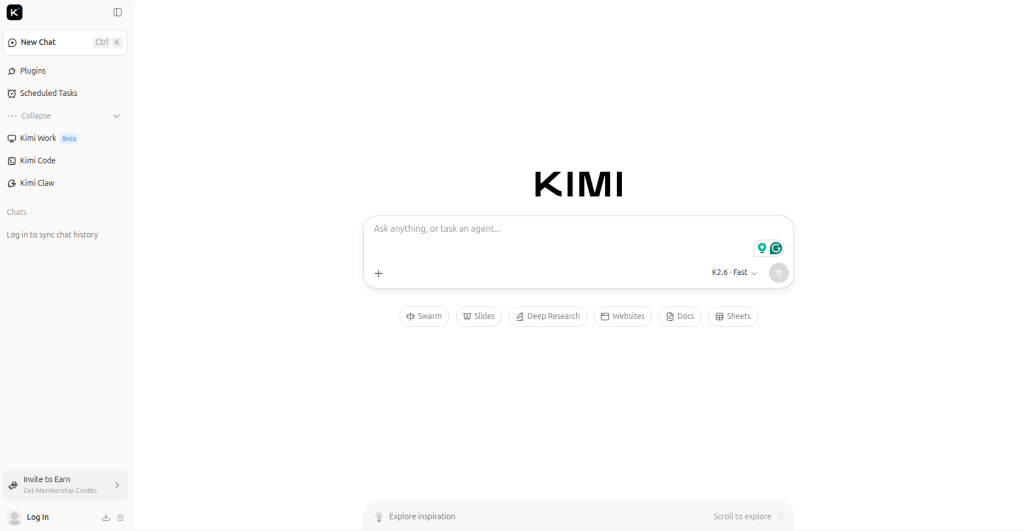
Kimi K3 is Moonshot AI’s flagship large language model, representing a deliberate push toward open-weight models that rival proprietary offerings in practical capability. The model carries 2.8 trillion parameters, making it the first open-weight model to cross the 3-trillion-parameter threshold and distinguishing itself through native multimodal input, an exceptionally large context window, and architectural innovations designed specifically for long-horizon reasoning and coding tasks.
The model’s positioning reflects a strategic decision by Moonshot to compete directly with Claude Fable 5 and GPT 5.6 Sol by offering frontier-class performance on open terms, rather than locking capabilities behind API walls or proprietary licensing.
Architecture & Technical Foundation
Kimi K3 is built on two primary architectural innovations: Kimi Delta Attention (KDA) and Attention Residuals (AttnRes). These components restructure how information flows across the model’s sequence length and depth, enabling more efficient scaling to extreme parameter counts.
The model employs a Mixture of Experts (MoE) framework that activates only 16 of 896 available experts during inference, a sparsity level that demands precision in routing logic. Moonshot addresses this through Stable LatentMoE, which combines Quantile Balancing for stable expert allocation with Per-Head Muon optimization for adaptive head-level learning at scale. These techniques compress compute requirements without sacrificing reasoning quality.
For practical deployment, Kimi K3 incorporates quantization-aware training using MXFP4 weights and MXFP8 activations, ensuring broad hardware compatibility without requiring custom silicon. The model is trained with a default “max thinking” mode enabled, allowing it to allocate reasoning compute toward complex problem-solving before generating outputs.
Intended Audience & Use Cases
Kimi K3 is explicitly designed for developers building agentic systems, researchers implementing complex computational pipelines, and teams requiring both depth of reasoning and length of context. The model’s native vision capabilities make it particularly valuable for tasks that blend code generation with visual feedback-game development, frontend engineering, CAD systems, and scientific visualization all fall naturally into this space.
Key Features Explained
Long-Context Processing (1M Tokens)
The 1-million-token context window is Kimi K3’s most immediately distinctive feature. To put this in perspective, you can fit the entire Harry Potter series, the complete US tax code, dozens of scientific papers, or a full-scale enterprise codebase all within a single prompt.
In practice, this means developers can operate in persistent sessions without losing architectural context or having to repeatedly re-upload reference materials. A researcher analyzing gravitational-wave events (as demonstrated in Moonshot’s case studies) can load 391 events across 20+ concurrent sub-agents, each with full access to the entire dataset without token budget fragmentation.
Mixture of Experts (MoE) Sparsity
Unlike dense models that activate all parameters for every token, Kimi K3 selectively routes each token to only 16 of 896 available experts. This creates computational efficiency: the model performs like a much larger network while consuming less inference compute than a dense equivalent.
The trade-off is routing stability. Moonshot solved this through Per-Head Muon and Quantile Balancing, which adapt expert selection dynamically and eliminate heuristic-based load balancing that historically caused performance degradation at extreme sparsity levels.
Native Multimodal Architecture
Vision capabilities are built into Kimi K3’s transformer foundation, not bolted on as a separate encoder. This unified approach allows seamless reasoning that combines visual and textual signals-a developer can screenshot a UI, describe a design change in natural language, and Kimi K3 generates working code that respects both constraints simultaneously.
Supported vision inputs include base64-encoded images and Kimi’s native file references (ms://<file-id>). Public image URLs are not accepted; you must explicitly encode or reference files.
Context Caching & Cost Efficiency
Moonshot reports a 90%+ cache hit rate on typical coding workloads. When the same context block appears in successive requests, it is cached at $0.30/M input tokens-an 90% discount from the standard $3.00/M rate. For teams running iterative workflows (agents refining code, researchers running parameter sweeps), this compounds into substantial savings.
The caching is automatic and requires no configuration; Moonshot’s inference infrastructure detects overlapping context and applies discount pricing transparently.
Reasoning & Agentic Capabilities
Kimi K3 operates with “max thinking” mode enabled by default, meaning the model allocates internal compute toward reasoning before generating output tokens. This differs from post-hoc reasoning models that chain prompts; K3’s reasoning is integrated into token generation.
This architectural choice enables long-horizon task execution: the model can accept a 48-hour autonomous task (build a GPU compiler, design a chip, complete scientific research), allocate thinking tokens as needed, and sustain coherent reasoning across hundreds of intermediate steps.
Token-Efficient Inference
Through quantization-aware training and expert-parallel optimization, Kimi K3 delivers competitive token generation speed despite its scale. Moonshot publishes full 1M-context serving through their official API with highly competitive latency, though specific TTFT (time-to-first-token) and token-per-second figures vary by load and cache state.
The model supports up to 131,072 output tokens by default but can be configured to generate up to the full 1,048,576-token window.
First Impressions & Real-World Performance
Developer Experience
Onboarding Kimi K3 is straightforward for developers already familiar with Anthropic or OpenAI APIs. Moonshot’s platform documentation is functional, though denser than competitors’. The /model command in Kimi Code (terminal integration) makes model switching trivial-one line to switch from K2.6 to K3 and access the larger context and native vision.
Response quality is where first impressions diverge depending on task type. For coding tasks requiring sustained multi-step reasoning, K3 delivers noticeably better outputs than GPT-5.5 and is competitive with Claude Opus 4.8. For open-ended creative or conversational tasks, users report that Claude Fable 5 and GPT 5.6 Sol feel more polished, with K3 occasionally over-committing to task execution when ambiguity exists.
Coding Capability in Practice
Kimi K3’s coding performance is genuinely impressive on long-horizon tasks. Moonshot’s case studies-building a Triton-like GPU compiler (MiniTriton) from scratch, designing a 45nm chip for nano-model inference, implementing 300+ astrophysical equations of state with validation-demonstrate sustained multi-day agentic capability that rivals or exceeds human specialist timelines.
On standardized coding benchmarks (DeepSWE, Terminal Bench, SWE Marathon), Kimi K3 ranks competitively against Fable 5 and GPT 5.6 Sol, with particular strength on long-context and multi-file tasks where context length becomes the limiting factor.
Reasoning Quality
Kimi K3 excels at tasks requiring multi-step logical inference: working through complex proofs, diagnosing ambiguous technical issues, analyzing contradictory evidence and reconciling it. On GPQA-Diamond (expert-level science reasoning), K3 scores 93.5%, nearly matching Fable 5’s 92.6%.
However, on some reasoning benchmarks (HLE-Full), K3 trails both Fable 5 and GPT 5.6 Sol, suggesting the architectural choices that enable long-context excellence may trade away some peak reasoning performance on shorter, denser problems.
Writing & Knowledge Work
For content generation, reports, and knowledge synthesis, K3 produces competent output. Kimi Work users report that K3 excels at generating structured reports with interactive visualizations, research synthesis from large document sets, and iterative refinement workflows.
Compared to Claude Fable 5, which many professionals perceive as slightly more polished in tone and nuance, K3’s writing is more functional than artistic. For developer documentation, technical reports, and data-driven narrative, this is rarely a limitation.
Latency & Response Speed
Token generation speed is competitive but not exceptional. Moonshot’s disaggregated inference architecture aims for consistent throughput across both cache-hit and cache-miss scenarios, prioritizing 1M-context serving over minimal latency. For real-time conversational applications, GPT-5.6 Sol and Claude Fable 5 may feel snappier.
For batch processing, research workflows, and agentic task execution where total time matters more than first-token latency, K3’s speed is adequate.
Benchmark Performance Analysis
Coding Benchmarks
| Benchmark | Kimi K3 (max) | Claude Fable 5 | GPT 5.6 Sol | Claude Opus 4.8 |
| DeepSWE | 67.5 | 70.0 | 73.0 | 59.0 |
| Terminal Bench 2.1 | 88.3 | 84.6 | 88.8 | 84.6 |
| Program Bench | 77.8 | 76.8 | 77.6 | 71.9 |
| SWE Marathon | 42.0 | 35.0 | 39.0 | 40.0 |
| FrontierSWE | 81.2 | 86.6 | 71.3 | 66.7 |
What These Numbers Mean:
DeepSWE and FrontierSWE measure the model’s ability to complete full-stack software engineering tasks end-to-end. K3’s 67.5 on DeepSWE places it solidly in the frontier tier, though trailing Fable 5’s 70.0 and GPT 5.6’s 73.0.
Terminal Bench 2.1 evaluates the model’s ability to reason about terminal environments, file systems, and command-line tools while executing complex tasks. K3’s 88.3 is exceptional, nearly tying GPT 5.6 Sol and significantly outperforming Opus 4.8.
SWE Marathon tests long-horizon task execution-does the model maintain coherence across dozens of iterative steps? K3’s 42.0 substantially outperforms Fable 5’s 35.0, suggesting that the architectural focus on reasoning longevity translates to real performance on multi-session engineering workflows.
Agentic & Knowledge Work Benchmarks
| Benchmark | Kimi K3 (max) | Claude Fable 5 | GPT 5.6 Sol | Claude Opus 4.8 |
| BrowseComp | 91.2 | 88.0 | 90.4 | 84.3 |
| Automation Bench | 30.8 | 29.1 | 29.7 | 27.2 |
| Job Bench | 52.9 | 57.4 | 46.5 | 48.4 |
| MCP Atlas | 84.2 | 84.7 | 83.6 | 83.6 |
K3’s strong performance on BrowseComp (web-based research and information retrieval) suggests the model integrates visual reasoning with content analysis effectively. The slight edge over Fable 5 on Automation Bench hints at better tool-use capability.
Reasoning Benchmarks
| Benchmark | Kimi K3 (max) | Claude Fable 5 | GPT 5.6 Sol |
| GPQA-Diamond | 93.5 | 92.6 | 94.1 |
K3 and its competitors cluster tightly on GPQA-Diamond, a benchmark of expert-level scientific reasoning. The 1-point separation is within noise margins and suggests comparable reasoning depth on curated expert questions.
Vision Benchmarks
| Benchmark | Kimi K3 (max) | Claude Fable 5 | GPT 5.6 Sol |
| MMMU-Pro | 81.6 | 81.2 | 83.0 |
| CharXiv (RQ) | 84.8 | 88.9 | 84.6 |
| MathVision | 94.3 | 94.8 | 95.8 |
Vision performance is competitive. K3 is marginally behind Fable 5 on CharXiv but leads on OmniDocBench (document understanding), suggesting native multimodality translates to real advantages on dense visual content.
Pricing Breakdown
API Pricing (Production Use)
Kimi K3 costs $3.00 per million input tokens and $15.00 per million output tokens, with cached input at $0.30 per million. The pricing is flat-no per-request surcharges, no thinking-mode upcharges, and no usage-tier discounts.
Pricing Table:
| Metric | Cost |
| Standard Input | $3.00/M tokens |
| Standard Output | $15.00/M tokens |
| Cached Input (90% discount) | $0.30/M tokens |
| Context Window | 1,048,576 tokens (1M) |
| Max Output Tokens | 131,072 (default); up to 1,048,576 (configurable) |
Cost Comparison: Kimi K3 vs Alternatives
For a representative workload of 1M input tokens + 100K output tokens:
- Kimi K3 (no cache): $3.00 + $1.50 = $4.50
- Kimi K3 (90% cache hit): $0.27 + $1.50 = $1.77
- Claude Sonnet 5 (intro pricing, through Aug 31): $2.00 + $1.00 = $3.00
- Claude Opus 4.8: $15.00 + $60.00 = $75.00
- GPT 5.6 Sol: $3.00 + $15.00 = $4.50
K3’s pricing is aggressive on output tokens (higher than Sonnet 5’s intro rate) but highly competitive with Sonnet 5’s standard rate and GPT 5.6 Sol. The 90%+ cache hit rate on coding workloads can cut effective costs by 60-80%, making K3 extremely cost-effective for iterative development workflows.
Who Benefits from Each Pricing Tier
Pay-as-you-go API (Recommended for):
- Development teams running iterative workflows (benefit from context caching)
- Research groups processing large document batches
- Startups with variable workload patterns
- Builders of agentic systems leveraging long context
Consumer Subscription Plans (Starting ¥199/month as of July 2026, recommended for):
- Individual developers with steady usage patterns
- Content creators building with Kimi Work
- Students and researchers with limited budgets
- Teams using pre-built Kimi apps rather than custom API integration
Kimi K3 Vs Gpt-5 Vs Claude Vs Gemini
Choosing between frontier models requires understanding their actual strengths across real use cases. The table below synthesizes performance data with practical considerations:
| Dimension | Kimi K3 | GPT 5.6 Sol | Claude Fable 5 | Gemini 2026 |
| Context Window | 1M | ~200K | ~200K | ~1M (Gemini 2) |
| Coding (DeepSWE) | 67.5 | 73.0 | 70.0 | Data not available |
| Terminal/Tools | 88.3 | 88.8 | 84.6 | Not published |
| Long-horizon Tasks | 42.0 (SWE Marathon) | 39.0 | 35.0 | Not published |
| Reasoning (GPQA) | 93.5 | 94.1 | 92.6 | 92+ (estimated) |
| Vision | 81.6-94.3 | 81.2-95.8 | 81.2-94.8 | Strong (evolving) |
| API Pricing | $3/$15 | $3/$15 | $3/$15 | Variable |
| Context Caching | $0.30 (90%+ hit rate) | Limited cache | $0.30 (60-80% hit rate) | Limited |
| Enterprise Support | Via Moonshot | Via OpenAI | Via Anthropic | Via Google |
| Best Use Case | Long-horizon coding, research | General-purpose intelligence | Safety-critical, conversational | Multimodal at scale |
Which Model Should You Choose?
Choose Kimi K3 if:
- You’re building software engineering agents that run for hours across massive codebases
- You work with research data or long documents (full papers, legal files, codebases)
- Context caching will save you 60%+ on monthly API spend
- You need strong multimodal reasoning integrated into a single model
- You want to benchmark an open-weight frontier model against proprietary options
Choose Claude Fable 5 if:
- You prioritize user experience and conversational quality above raw benchmark scores
- You’re building safety-sensitive applications requiring robust alignment
- You need Anthropic’s extended enterprise support and security compliance
- Your workload fits within 200K token context (most conversational and analysis tasks do)
Choose GPT 5.6 Sol if:
- You need peak absolute reasoning performance and advanced reasoning (alpha-tower features)
- Your workflows align with OpenAI’s API ecosystem
- You require real-time model updates from OpenAI’s continuous deployment
- You’re building consumer-facing applications where brand recognition matters
Choose Gemini 2 if:
- You’re an enterprise Google Cloud customer with priority infrastructure
- You need deeply integrated multimodal reasoning at production scale
- You value Google’s research leadership and model diversity across tiers
Read More : Did ChatGPT 5.6 Remove the 5 Hour Usage Limit?
Real-World Use Cases & Workflows
For Developers & Software Engineers
Scenario: Building a Full-Stack Web Application
A developer uses Kimi K3 within Kimi Code to maintain a persistent session spanning architecture design, frontend component generation, backend API scaffolding, and testing. The 1M context window holds the entire codebase, design documents, and API specifications. K3 generates working code iteratively, learns from each prior attempt through context accumulation, and sustains logical consistency across 50+ turns of conversation. The cached input rate reduces API costs from ~$50 to ~$15.
Scenario: GPU Kernel Optimization
A machine learning engineer uses K3 with terminal access to profile GPU kernels, identify bottlenecks, rewrite assembly-level optimizations, and benchmark performance. K3’s ability to reason across terminal output, code structure, and performance metrics for 24+ hours allows complex optimization work that normally requires days of specialist time.
For Research & Academic Teams
Scenario: Computational Astrophysics
A research group reproduces universal relations across 300+ equations of state, validating against published literature. They upload 20+ papers, raw data, and existing code to K3. The model reviews the papers, identifies inconsistencies in published formulas, implements the full computational pipeline, and generates an interactive dashboard for results exploration. K3 completes in ~2 hours what would typically take 1-2 weeks of human specialist time.
Scenario: Literature Synthesis & Meta-Analysis
A researcher asks K3 to analyze 100+ research papers on a topic, extract structured data, identify contradictions, and synthesize a cohesive narrative. K3’s long context and tool-use capabilities allow deep engagement with full PDF papers, structured extraction, and visualization all within one session.
For Startups & Product Teams
Scenario: Building Interactive Reports
A startup uses Kimi Work to build consulting-style industry reports with 42 years of ASIC history, timelines, funnel charts, Gantt charts, and animated diagrams. K3 performs 2,800+ web searches, 1,100+ data pulls, and synthesizes 11,000+ pages of source material into publication-quality interactive HTML/slides. One person completes work that normally requires an entire research team.
Scenario: Game & Digital Creation
A solo developer uses K3’s vision capabilities to turn concepts, images, and videos into playable interactive experiences. K3 generates Three.js WebGPU code with procedural generation, iterates on visual output by processing screenshots, and refines game mechanics end-to-end within a single 6-8 hour session.
Best Practices For Optimal Results
Prompt Engineering for Long Context
When using the full 1M context, structure your prompt to maximize information density:
- Organize reference materials hierarchically: Group related documents, code files, and specifications under clear headers so K3 can efficiently retrieve relevant context.
- Use explicit anchors: Rather than embedding code inline and hoping the model finds it, add markers like [REFERENCE: auth.py – line 234-456] to make critical sections easily navigable.
- Separate concerns: If your task has distinct phases (research, implementation, validation), explicitly separate them in the prompt to avoid attention dilution across phases.
API Optimization & Cost Reduction
- Leverage context caching aggressively: If you’re running iterative workflows (agents refining code, batch research tasks), structure your API calls to maximize repeated context blocks.
- Use cached input for reference materials: Upload full codebases, documentation, or datasets once, then reuse them across multiple requests at the $0.30 cached rate.
- Configure output tokens strategically: Set max_completion_tokens to your actual needs rather than the default 131,072. Many tasks need 2,000-8,000 output tokens; explicitly limiting this reduces costs and latency.
Context Management for Extended Sessions
- Preserve thinking history: K3 was trained with thinking history enabled. If you’re switching sessions or chaining requests, pass the full historical thinking context back to K3, or generation quality degrades.
- Avoid mid-session model switching: K3 has specific training assumptions. Switching from K2.6 to K3 mid-way through an agent workflow can cause coherence loss.
- Use system prompts for behavioral constraints: K3’s training emphasizes long-horizon task execution, which can lead to over-commitment (making decisions on your behalf). Use explicit system prompts to constrain behavior if your workflow requires strict boundaries.
Evaluation & Quality Workflows
- Test on your specific task class: K3’s benchmarks are strong on coding and long-horizon tasks, but testing on your actual use case is essential before committing to production.
- Compare against your current baseline: If you’re currently using GPT-5.5 or Claude Opus, run 10-20 representative requests through both and measure outputs against your success criteria before migrating.
- Monitor cache hit rates: Use Moonshot’s dashboard to track cache hit rates on your workloads. If you’re seeing <50% cache hits, restructure your requests to maximize repeated context.
Limitations & Honest Trade-Offs
Sensitivity to Thinking History
K3 was trained with preserved thinking history-the model’s internal reasoning steps are kept and passed back on subsequent turns. If an agent harness fails to return complete thinking history, or if you switch from another model mid-session, K3’s generation quality can become unstable. This is a hard constraint, not a soft preference.
Practical implication: Use verified-compatible harnesses (Kimi Code, Claude Code’s K3-compatible mode) and avoid mid-session model switching.
Excessive Proactiveness in Ambiguous Situations
K3’s training emphasized long-horizon, challenging task execution. When it encounters minor issues or ambiguous user intent during execution, it sometimes makes unexpected decisions on your behalf rather than pausing to ask for clarification.
Practical implication: This is excellent for autonomous research agents but problematic for applications requiring strict boundaries. Use explicit system prompts and AGENTS.md configuration to constrain behavior if needed.
User Experience Gap vs Fable 5 & GPT 5.6 Sol
Despite strong overall performance, K3’s interaction quality lags behind Claude Fable 5 and GPT 5.6 Sol on subjective dimensions: response polish, conversational naturalness, and edge-case error recovery feel less refined.
Practical implication: K3 excels when measured by benchmarks and task completion speed, but may feel less “pleasant” in day-to-day conversation compared to leading proprietary models.
Ecosystem Maturity
Kimi K3 is brand new. Enterprise support infrastructure, third-party integrations, fine-tuning options, and deployment templates lag behind OpenAI and Anthropic. Production teams may need to build their own tooling rather than adopting off-the-shelf solutions.
Documentation & Model Weights
As of July 2026, K3 is described as open-weight but the actual model weights have not yet been released to Hugging Face (scheduled for July 27, 2026). Self-hosting remains speculative until weights are public and quantized community builds emerge.
Benchmark Interpretation Caveat
All K3 benchmarks are reported with “max thinking” effort enabled, temperature 1.0, top-p 1.0. These settings prioritize reasoning depth over speed. Real-world performance on other settings or with different harness configurations may vary. Moonshot indicates that low- and high-effort thinking modes will be added in future updates.
Expert Insight: Where Kimi K3 Fits In The Frontier Landscape
Kimi K3 represents a strategic inflection in open-weight model development. Rather than competing on peak performance (where Fable 5 and GPT 5.6 Sol remain superior), K3 wins through sustained capability over long horizons.
Consider this: A developer can load their entire 500KB codebase, 50+ API docs, architecture diagrams, and test files into K3 simultaneously. They then ask the model to implement a new feature end-to-end. The model maintains coherence across all that context, iterates on its own code based on test results, and completes tasks that require explicit human oversight with other models.
This is where K3’s value concentrates: not in peak reasoning on compact problems, but in long-horizon agentic execution where the ability to hold massive context and reason across it consistently matters more than marginal improvements in individual benchmark scores.
The open-weight release is strategically important too. Teams building custom systems, deploying in restricted network environments, or requiring model ownership can use K3 weights directly. This unlocks use cases inaccessible to proprietary models and creates competitive pressure on pricing across the sector.
However, K3 is not yet the “GPT-5 killer” some hype suggested. It trails on many reasoning benchmarks, requires careful prompt engineering and harness compatibility, and lacks the polish of Claude Fable 5. It’s a formidable specialist model for engineering and research, not a replacement for generalist use cases.
The developers most likely to benefit: AI/ML engineers building agentic systems, researchers running computational pipelines, startups requiring cost-effective scale, and teams where long context availability matters more than marginal reasoning gains.
Final Verdict
Summary of Strengths
Kimi K3 delivers frontier-class performance in long-horizon coding, sustained task execution, and context-heavy workflows. Its 1M-token context window, strong coding benchmarks, open-weight architecture, and cost-saving context caching make it a compelling choice for AI agents, research automation, and complex software development.
Summary of Weaknesses
K3 trails GPT 5.6 Sol and Claude Fable 5 on some reasoning benchmarks, lacks their conversational polish, and requires careful harness compatibility and thinking history preservation. As a new model, its enterprise ecosystem, fine-tuning options, and tooling are still maturing.
Who Should Use Kimi K3
Best fit:
- AI engineers and researchers running long-running autonomous tasks
- Development teams working with large codebases and long-context workflows
- Startups looking to reduce API costs through context caching
- Academic teams processing large document or research datasets
Evaluate further if you’re building:
- Conversational AI applications (compare with Claude Fable 5 first)
- Safety-critical systems requiring strong alignment
- Enterprise deployments needing mature self-hosting and data residency
Who Should Look Elsewhere
- Teams seeking the strongest reasoning performance (GPT 5.6 Sol)
- Conversational AI products (Claude Fable 5)
- Resource-constrained deployments (DeepSeek V4 or Claude Sonnet 5)
Actionable Next Steps
- Benchmark K3 against your current model using representative workloads.
- Optimize workflows to maximize context caching and reduce API costs.
- Monitor cache hit rates and token usage over several weeks before wider adoption.
- Follow Moonshot’s Hugging Face and GitHub releases for model weights, quantized versions, and self-hosting updates.
Frequently Asked Questions
Is Kimi K3 worth using instead of Claude or GPT-5?
It depends on your use case. For long-horizon coding, research automation, and complex multi-file tasks where 1M context provides direct advantage, K3 is compelling. For conversational quality or peak reasoning, Claude Fable 5 and GPT 5.6 Sol remain superior. Most teams benefit from having access to multiple models and choosing per-task.
How does Kimi K3’s 1M context compare to competitors?
Claude Fable 5 and GPT 5.6 Sol have ~200K context. Gemini 2 also supports 1M context. K3’s 1M window is genuinely rare, but only benefits you if your actual workload exceeds 200K tokens; most conversational and analysis tasks fit comfortably in 200K.
What’s the real cost after caching?
At 90% cache hit rate (typical for coding workloads), K3’s effective cost drops from $4.50 to $1.77 per 1M input + 100K output. That’s 60% cheaper than standard pricing and highly competitive with Claude Sonnet 5’s introductory rate.
Can I self-host Kimi K3?
Model weights are scheduled for public release July 27, 2026. Once available, you’ll need ~1.5TB of GPU memory to run inference (difficult on current consumer hardware) or access to professional infrastructure. Quantized builds will likely emerge within weeks.
How does K3 handle reasoning-is it like o1 or different?
K3 uses integrated reasoning within token generation (max thinking mode), not the chaining strategy of o1/o1-pro. It allocates compute toward internal reasoning before generating outputs, which is efficient for sustained tasks but may not match o1’s peak performance on isolated hard problems.
Does Kimi K3 support function calling and tool use?
Yes. K3 supports native tool use and integrates with MCP (Model Context Protocol) systems. Tool calling performance is competitive with Fable 5 on benchmarks like MCP Atlas.
Is there a free tier for Kimi K3?
No permanent free tier. Kimi requires at least a $1 recharge to activate an account. Some third-party providers (OpenRouter, Cloudflare Workers AI) have carried Kimi models on free tiers historically, but availability changes; verify before depending on it.